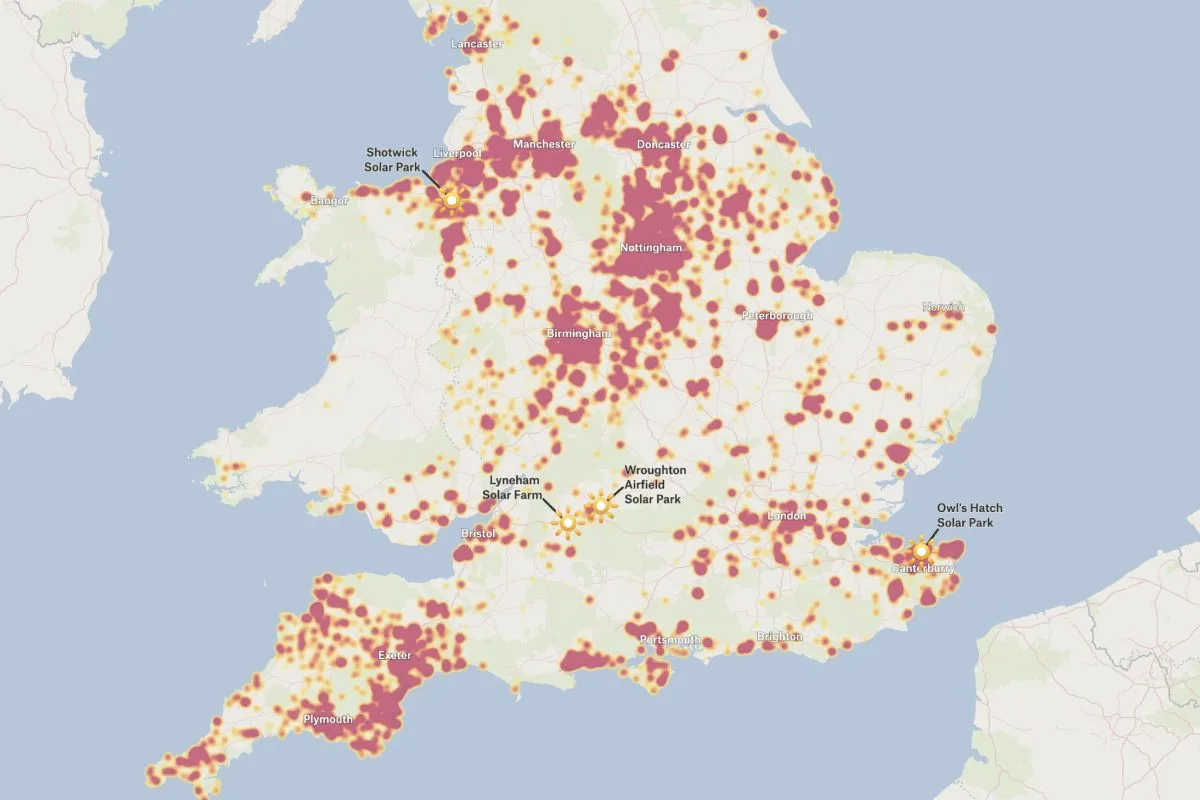
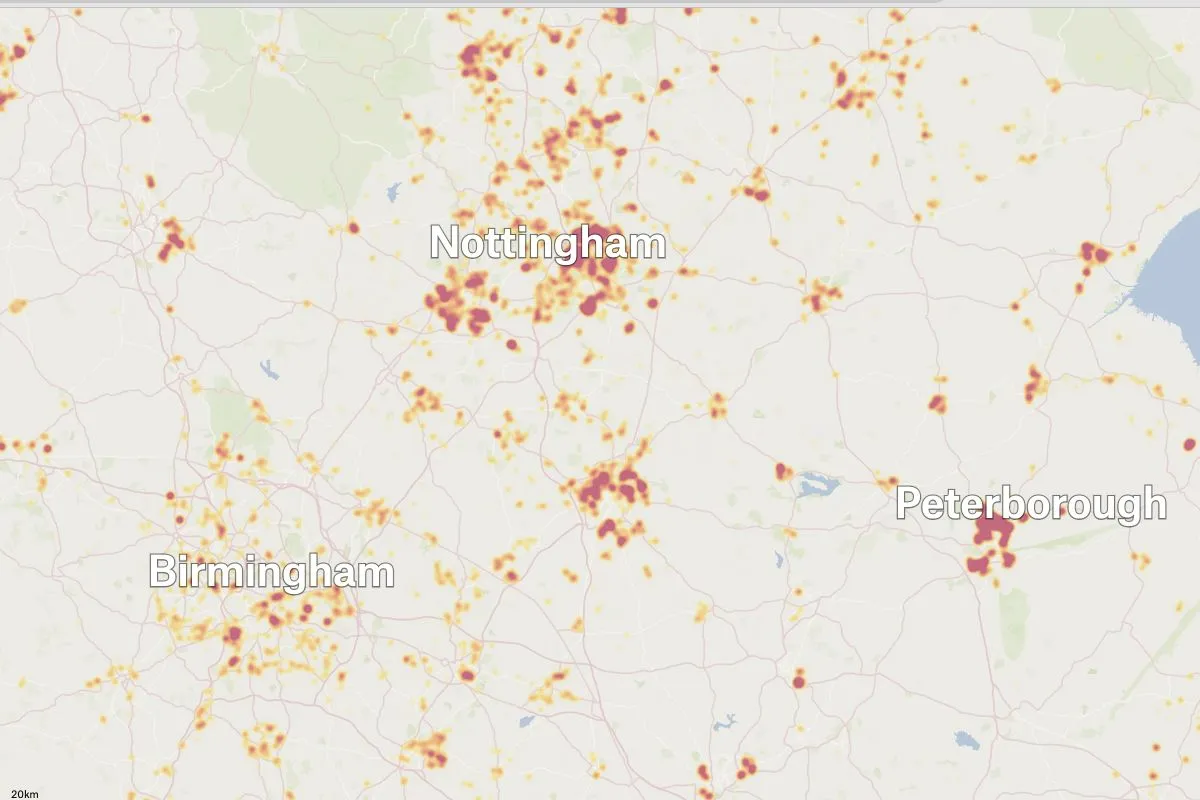
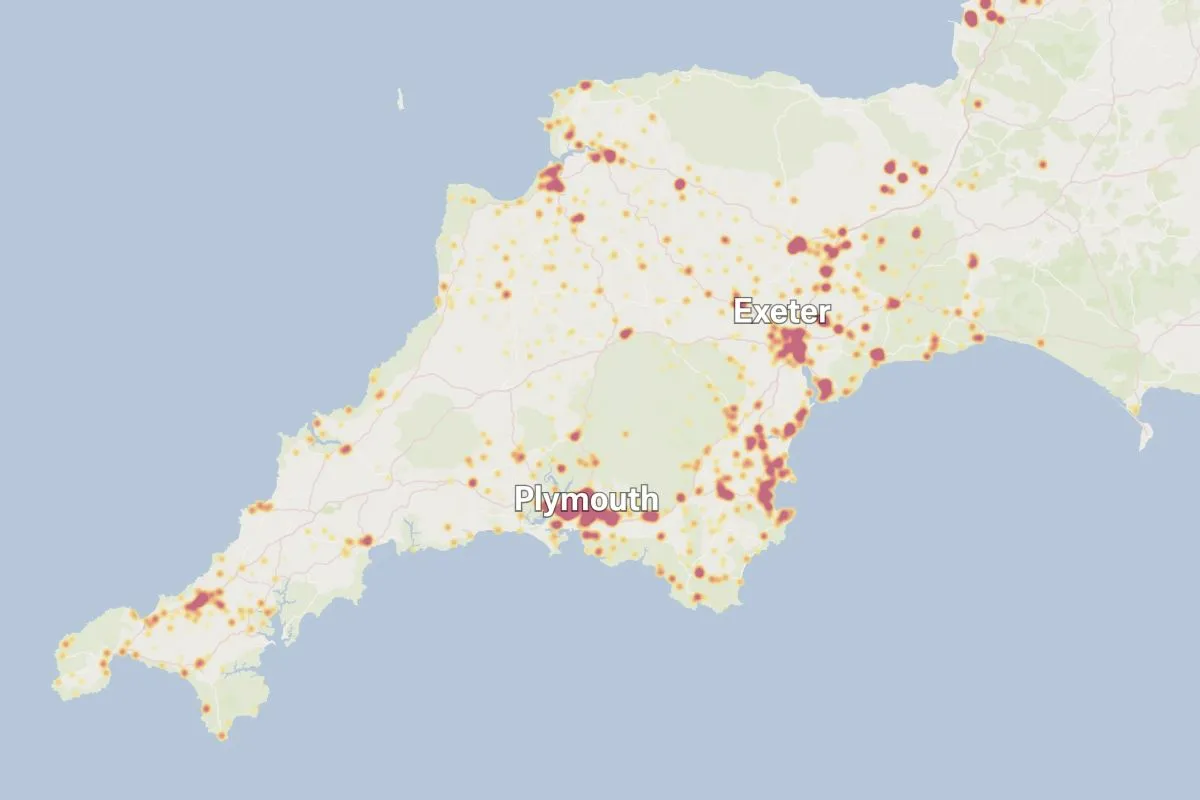
This heat map shows the density of solar panels and solar farms across the United Kingdom using Geographic Open Data (UKPVGeo). By analyzing this data and creating a heat map, we can identify areas in the UK that have a higher concentration of solar panels and solar farms, and use this information to inform policy decisions and future solar energy projects. Additionally, this map can help us to understand the impact of solar energy on the UK’s energy sector and economy as a whole. Making a heat map from point data takes one click of a button in Felt, and getting data into Felt is easier than ever with our API, QGIS plug-in, or by hosted data URLs, like Google Sheets. See how here.
Solar Panels and Solar Farms in the United Kingdom
More views
FAQ
Common questions
01What are the disadvantages of solar farms in the UK?
Disadvantages include land use competition with agriculture, visual impact on rural landscapes, potential effects on local ecosystems and wildlife habitats, intermittent energy production due to UK’s limited sunlight (especially in winter), high initial installation costs, and concerns from local communities about property values and landscape changes. Some also cite the carbon footprint of manufacturing and transporting solar panels.
02What is a safe distance to live from a solar farm in the UK?
There are no official government-mandated minimum distances for safety reasons, as solar farms don’t emit harmful radiation or pollutants. However, planning guidelines sometimes recommend buffer zones of 50-100 meters to address visual amenity and glint/glare concerns. Health and safety authorities consider solar farms safe to live near at any reasonable distance.
03Are solar farms viable in the UK?
Yes, solar farms are viable in the UK despite lower sunlight levels compared to sunnier regions. The UK receives enough solar radiation to make solar energy economically feasible, especially with improved panel efficiency and government incentives. Solar capacity has grown significantly in the UK, and solar farms continue to be developed as part of renewable energy targets, though they’re more productive in southern England than in Scotland.
Try Felt
Bring your data, see it on the map
Connect a database or drop in a file and see your data live on a map in minutes.