How Alta Planning + Design Uses Felt for Modern Client Collaboration
Felt allows us to have really productive dialogue remotely.
The Challenge: remote collaboration with clients and stakeholders
Alta Planning + Design is an international consulting firm with a mission to create active communities where bicycling and walking are safe, healthy, fun, and normal daily activities. Philip Longenecker is a Portland-based Planner at Alta working on a range of projects. When working on a new project, Philip usually starts with technical research and spatial analysis using GIS and R, evaluating alternatives and providing data driven recommendations. Then he goes into mapping and visualization of possible solutions for clients and evaluating policy priorities for allocating space in the right-of-way to support multi-modal transportation.
To be successful, Philip needs to get inputs from his coworkers, the firm’s clients, and local communities. Before discovering Felt, he struggled with finding the right tool that would allow him to collaborate seamlessly with multiple stakeholders. Now Felt allows him to host remote workshops, run client presentations, and collect his research insights in one place.
The Solution: Felt’s cloud native platform for gathering project feedback
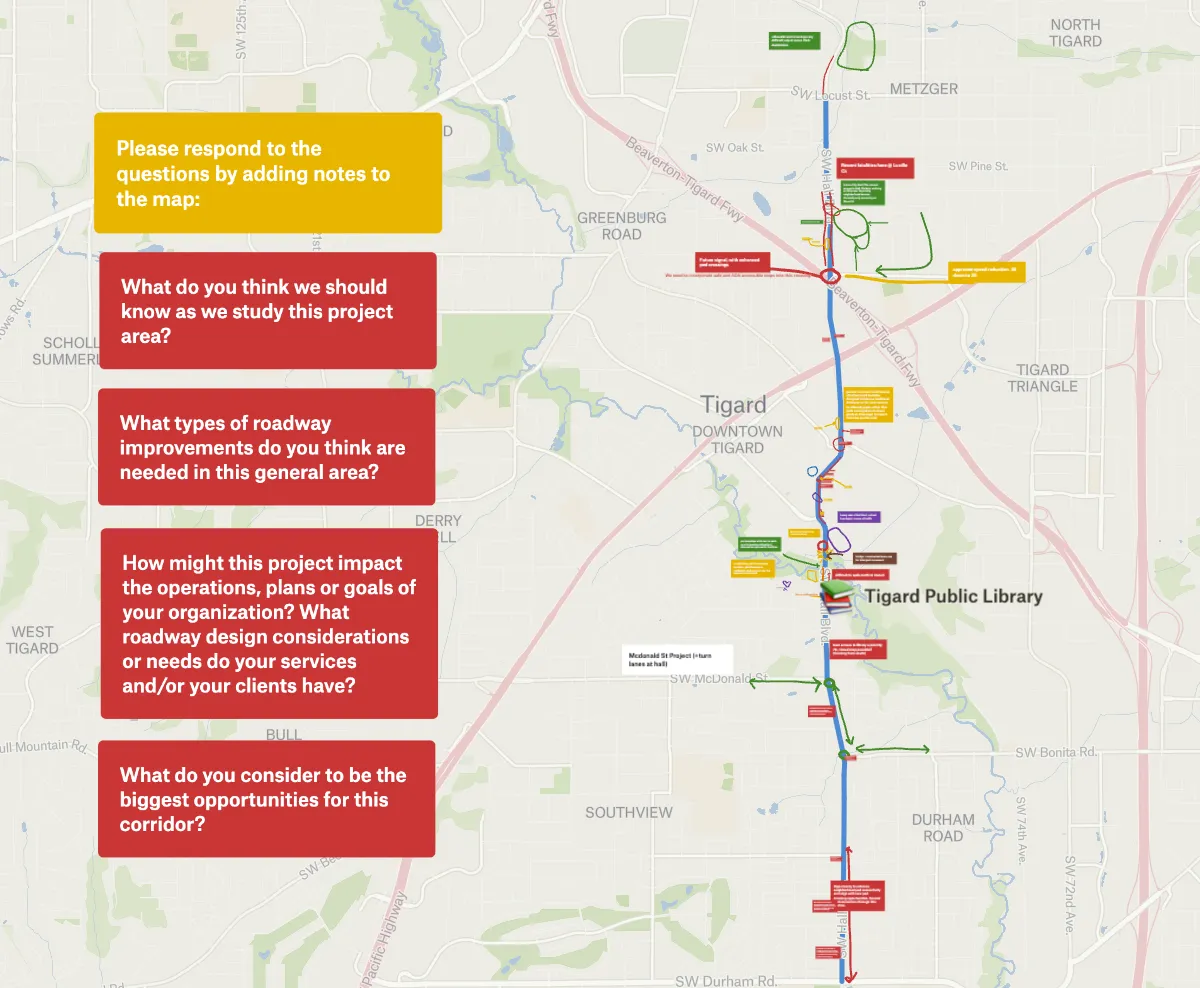
When working on a transportation project for the City of Tigard, OR, the team needed to get input from several community focus groups remotely. Philip was looking for a tool to host virtual design charrettes – events where stakeholders can collaborate and draw notes together in real-time, without the need for printed maps or being in the same room. He tried using other collaboration tools but they just didn’t work well for maps. Felt’s platform, which is both simple to use and enables synchronous collaboration, was the perfect solution.
Philip outlined a project area on a map and invited ten people to collaborate on it. His stakeholders used notes to add the community’s feedback about driving conditions, as well as opportunities for better crossings, green infrastructure, and enhanced bus stops. These insights helped Alta team members to get necessary context to develop their proposal for road improvements. “Felt allows us to have really productive dialogue remotely,” Philip shared of the experience.