Construction site inspections: From field data to insights
Learn what construction site inspections are, when they occur, key elements, and how Felt improves data.

Learn what construction site inspections are, when they occur, essential elements to review, and how Felt enhances field data collection workflows AI
Construction site inspections prevent small problems from ballooning into big consequences. Issues like loose scaffolding and unstable excavations can escalate quickly on an active job site. Inspections help teams surface risk early, verify safe working conditions, and protect everyone on site.
Read on to learn what site inspections entail and when they happen throughout a job. Plus, learn why Felt’s Field App helps analysts standardize data to improve reports on and off the construction site.
What’s a construction site? Definition and types
A construction site is a defined indoor or outdoor space where building, infrastructure, or engineering work is underway. It operates as a strictly controlled work environment, full of workers, machinery, and temporary structures like fences and field offices that support daily operations.
The most common types include:
- Residential construction sites: Areas for projects focused on housing, from individual homes to large residential developments
- Commercial construction sites: Spaces built for business use, including offices, warehouses, and retail properties
- Industrial construction sites: Large-scale facilities designed for manufacturing or processing, often with specialized machinery and equipment
- Infrastructure construction sites: Areas for public works, including public roads, bridges, and tunnels
What’s a construction site inspection?
A construction site inspection is a formal check that confirms work progresses safely and in compliance with regulations. It also ensures the project is consistent with approved plans and scope.
Inspections occur throughout the construction project. For instance, a safety inspector confirms proper excavation protocols during a pre-construction soil sampling, and a separate inspector conducts a framing check once the foundation is set. During these surveys, professionals typically document working conditions, flag compliance issues, and draft detailed reports to inform stakeholders as work continues.
Construction site inspections across every phase
Inspections start during planning stages and extend into ongoing site management. Here’s how construction site checks affect a job.
Construction site planning
Site planning determines how teams will organize and execute tasks across a job site. It lays the foundation for the entire construction project by organizing the site’s layout, logistical sequencing, and resources.
Inspections at this stage typically identify proximity to hazards, like power lines and traffic routes, and confirm the site is ready for work. For instance, an inspector may verify the soil density to ensure it can support a foundation.
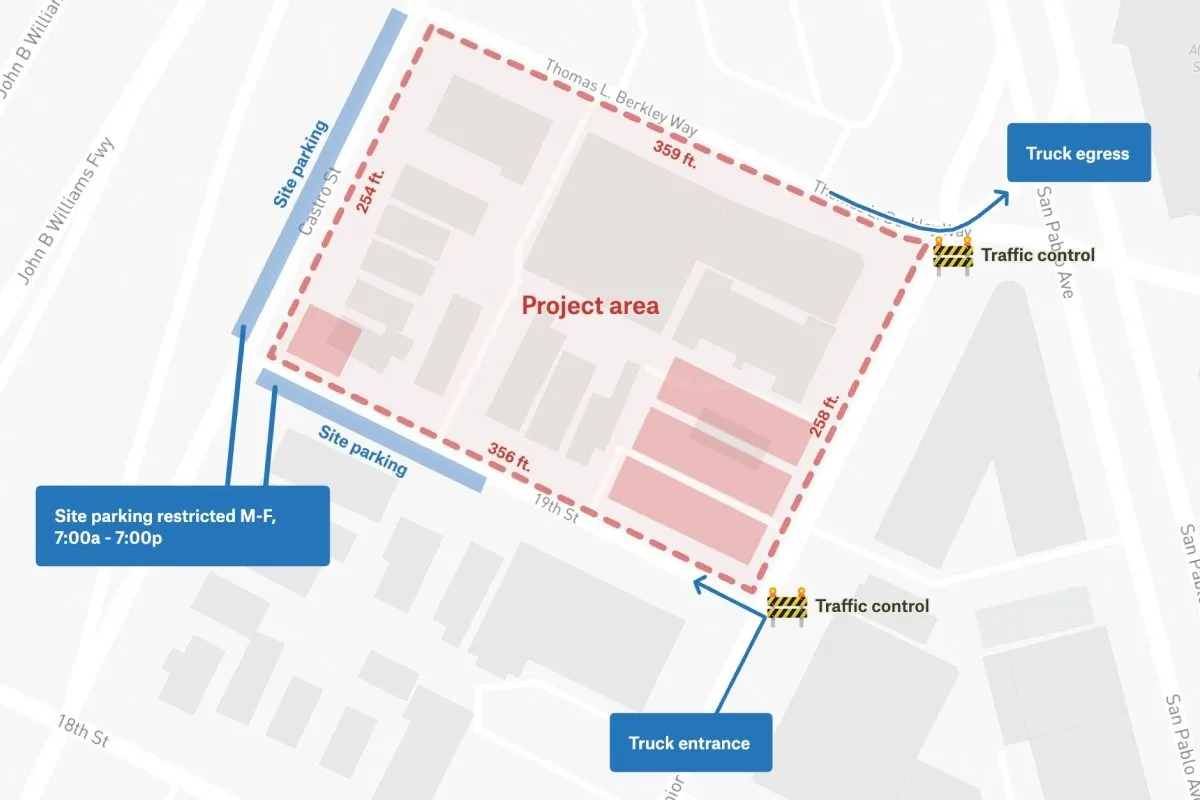
These checks are more thorough and efficient with a blueprint of the territory — like the construction site map below. This gives inspectors visibility into building locations, access routes, and utilities — while also considering logistical factors like how workers will deliver materials and move in and out of the site.
Early inspections ensure a strong, safe start, giving surveyors and managers a baseline to monitor progress and address issues continuously.
Construction site management
Management focuses on mitigating risk and maintaining site safety as work advances, regularly checking that established controls are effective throughout the process. Many inspections need to happen while a project is underway, often after each major step. For example, a team may check a site after laying foundation, then again after placing the framing.
Mid-progress inspections confirm that the project meets safety standards until the end. Suppose a routine check identifies an issue with scaffolding during insulation installation. Site managers must analyze the risk, adjust the scaffolding structures, and document the site safety procedures.
Construction tracking tools support ongoing inspections. This software gives inspectors real data to understand what needs attention and where, helping them target specific concerns. It also allows managers to monitor high-risk areas after inspections to ensure they remain safe and compliant.
4 must-haves in your construction site inspection checklist
Here are four key components of construction inspections to include in your project.
1. Tracking and registering daily progress
Progress reports log daily activity, including how many workers are on site, which equipment they use, and what work they completed. This field data collection is the lifeline to successful construction, supporting healthy communication and legal documentation. It also keeps every stakeholder in the loop.
2. Monitoring safety hazards
Safety hazard inspections look for on-site risks that might complicate workers’ health and safety and the construction’s integrity overall. When a safety inspection identifies a hazard, the report includes a detailed analysis alongside necessary corrective actions.
3. Checking quality control
During early stages, managers determine the project’s needs, including structural, installation, and material requirements. A quality control inspection corroborates that construction matches these plans. For instance, an inspector might verify that a team is using mold-resistant paints and coatings to reduce moisture-related issues in humid environments.
4. Conducting environmental analysis
Environmental checks happen throughout the project, monitoring how site activity affects the area and vice versa. Pre-construction analysis might include soil sampling on undeveloped plots to evaluate stability. Ongoing inspections document waste handling, air and water quality, and site conditions that might create off-site risks.
Enhance your construction inspection reports with Field App
Construction site inspections rely on trustworthy, consistent data capture. Inspectors need to record conditions with context to show stakeholders that a project is safe, functional, and compliant.
Felt’s Field App is a powerful construction inspection app that supports transparent and safe workflows. This tool lets you create custom surveys to effortlessly document assets and observations. Track progress and adapt to shifting conditions in real time — completely offline. Field App re-syncs once you’re back in range so you’re ready to analyze and share your findings.
You can even attach geotagged photos directly to features and comments for enhanced context. This captures conditions with clarity, making reports easier to review and act on.
Transform field data into actionable insights with Felt.
FAQ
How often are construction sites inspected?
Construction sites are inspected regularly throughout the life of a project. The specific frequency depends on the project scope, risk level, and local regulations. Inspections may occur daily or weekly, with additional checks to monitor specific changes in the scope or site conditions.
What are the duties of a construction inspector?
A construction inspector monitors and documents work on the job site. They’re responsible for conducting formal checks, documenting them in detailed reports, and outlining follow-up actions.