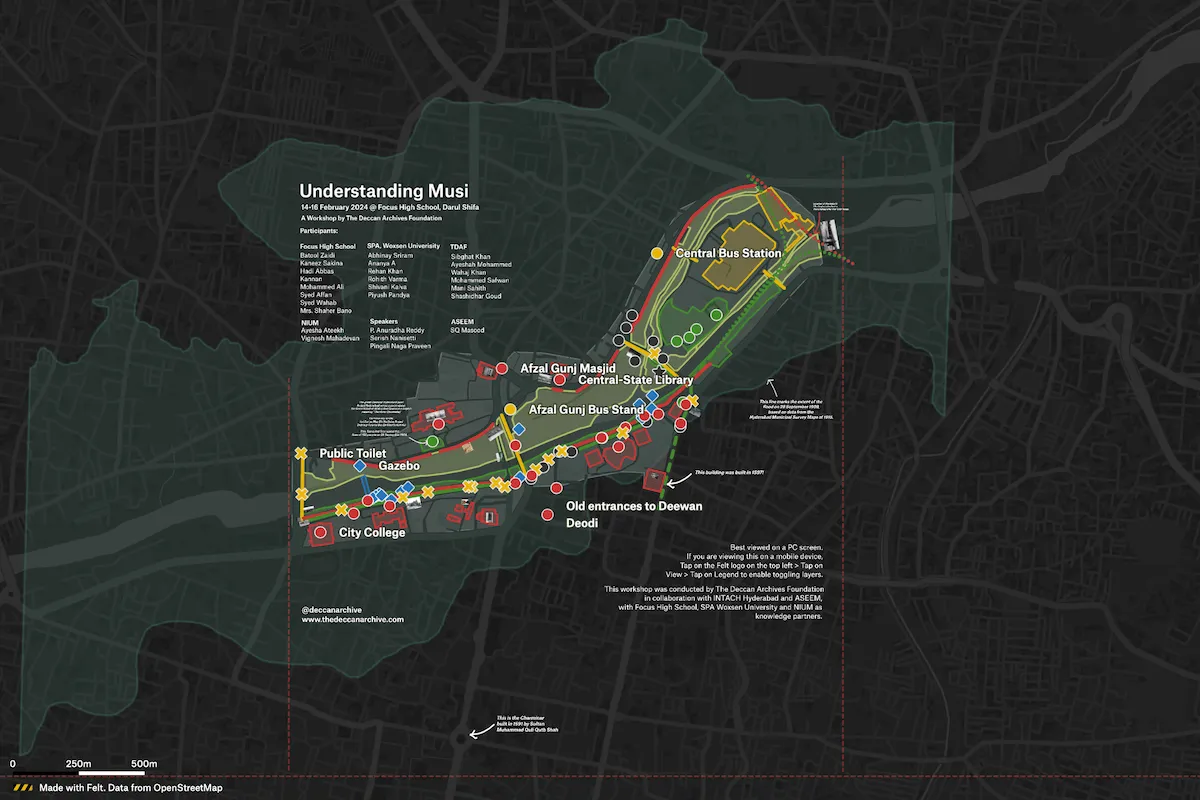
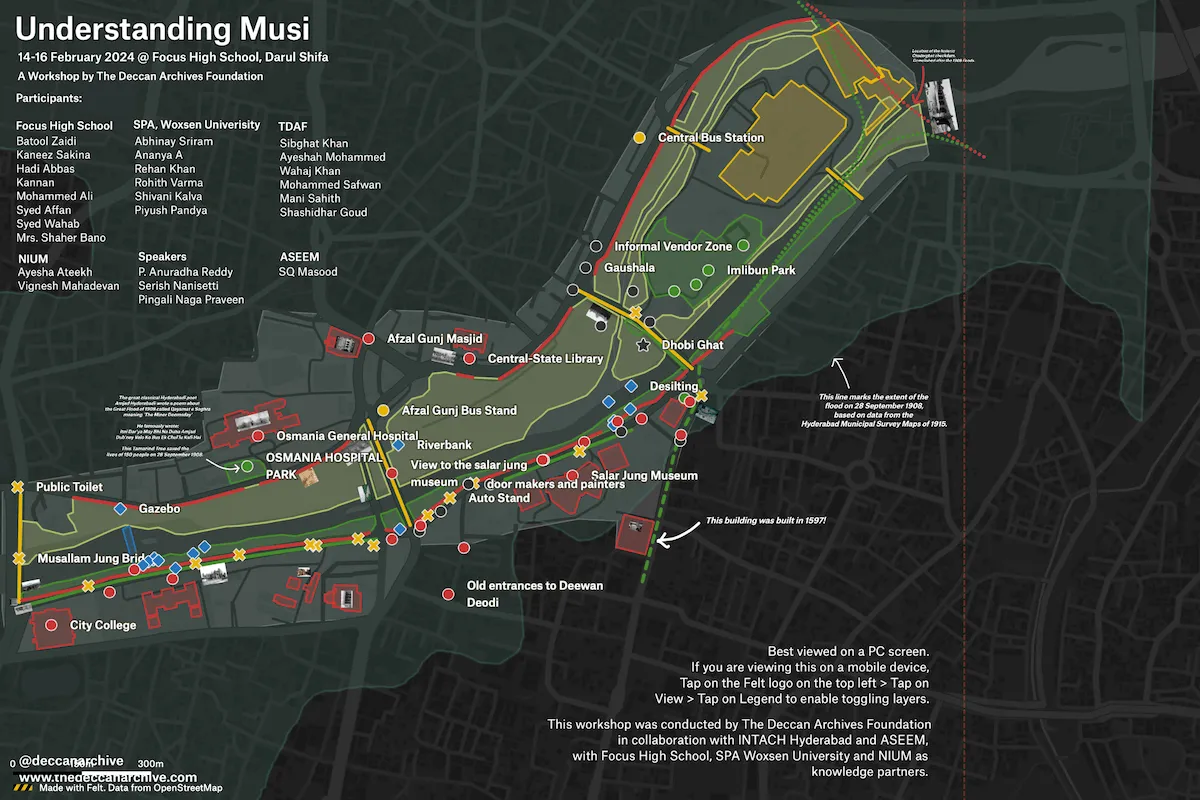
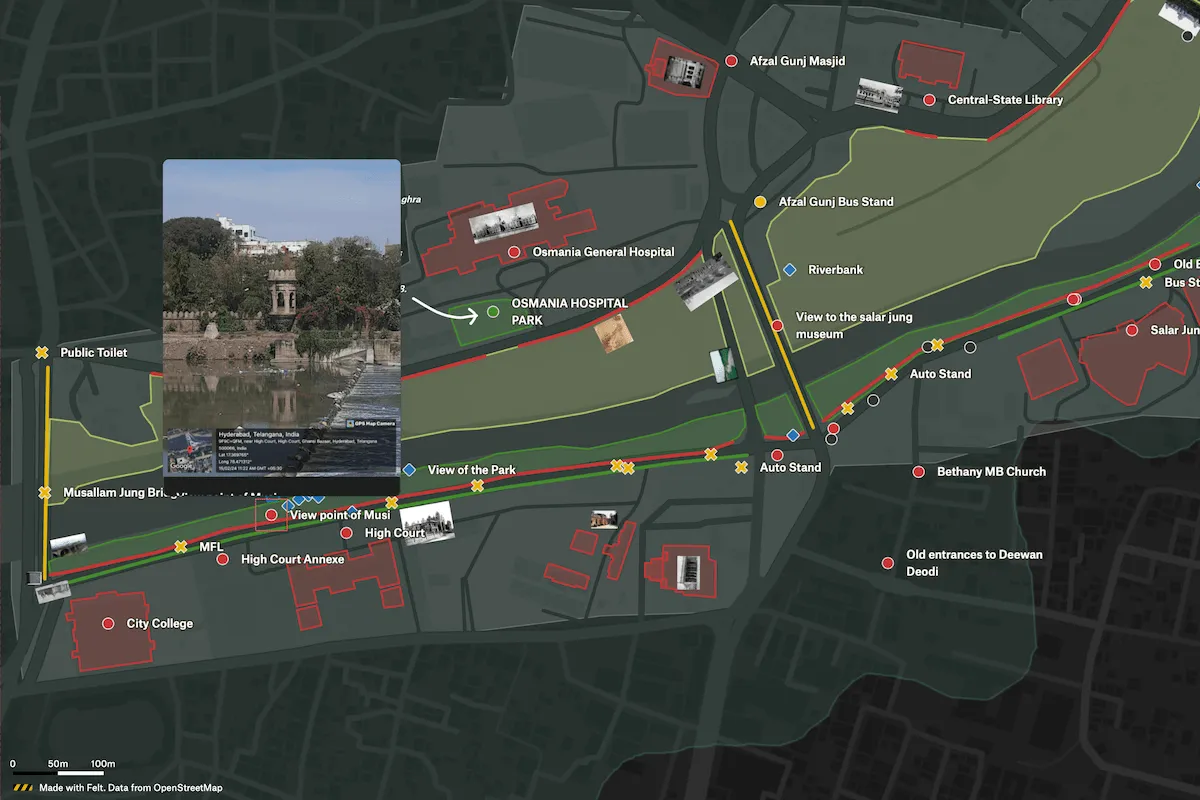
In a workshop hosted by The Deccan Archives Foundation, in collaboration with INTACH Hyderabad and ASEEM, collaborators mapped the historic core of the river Musi through on site visits, and sessions on history and ecology of the river by experts.
The Musi River is a major tributary of the Batanghari River system flowing through South Sumatra, Indonesia, serving as a vital waterway for the city of Palembang and surrounding regions. The river stretches approximately 750 kilometers (466 miles) from its headwaters to its confluence, making it one of the longest rivers in Sumatra. The Musi originates in the Barisan Mountains in the western highlands of South Sumatra province, fed by rainfall and mountain streams in this rugged terrain. The river flows generally eastward across the Sumatran lowlands, passing through Palembang (one of Indonesia's oldest cities and a historic trading center) before emptying into the Bangka Strait, which separates Sumatra from Bangka Island. The Musi basin supports millions of people with water for agriculture, fishing, transportation, and industry, though the river faces significant pollution challenges from urban runoff and industrial discharge. Historically, the Musi served as the heart of the powerful Srivijaya maritime empire (7th-13th centuries), and today it remains crucial for commerce, with boats and barges transporting goods between Palembang and coastal ports.RetryClaude can make mistakes. Please double-check responses.
The Musi River originates in the Ananthagiri Hills of the Western Ghats in Telangana, India. It flows approximately 150 miles eastward through Hyderabad before joining the Krishna River as a tributary near Wazirabad in the Nalgonda district.
Hyderabad, the capital city of Telangana, India, is the major city located on the Musi River. The river flows through the heart of the city, historically dividing the old city from the new city areas.
The Musi River has historical, cultural, and economic importance as a water source for Hyderabad and surrounding agricultural areas. It played a crucial role in the city's development, though it has faced significant pollution challenges in recent decades. The river and its embankments are also sites of historical landmarks and serve flood control functions for the region.
.png)