Put maps in your product without building the map stack
Mapbox gives developers building blocks for maps, navigation and search. Felt is a finished mapping platform: bring your data, style and analyze it, and embed it in your product with no tile pipeline to build.
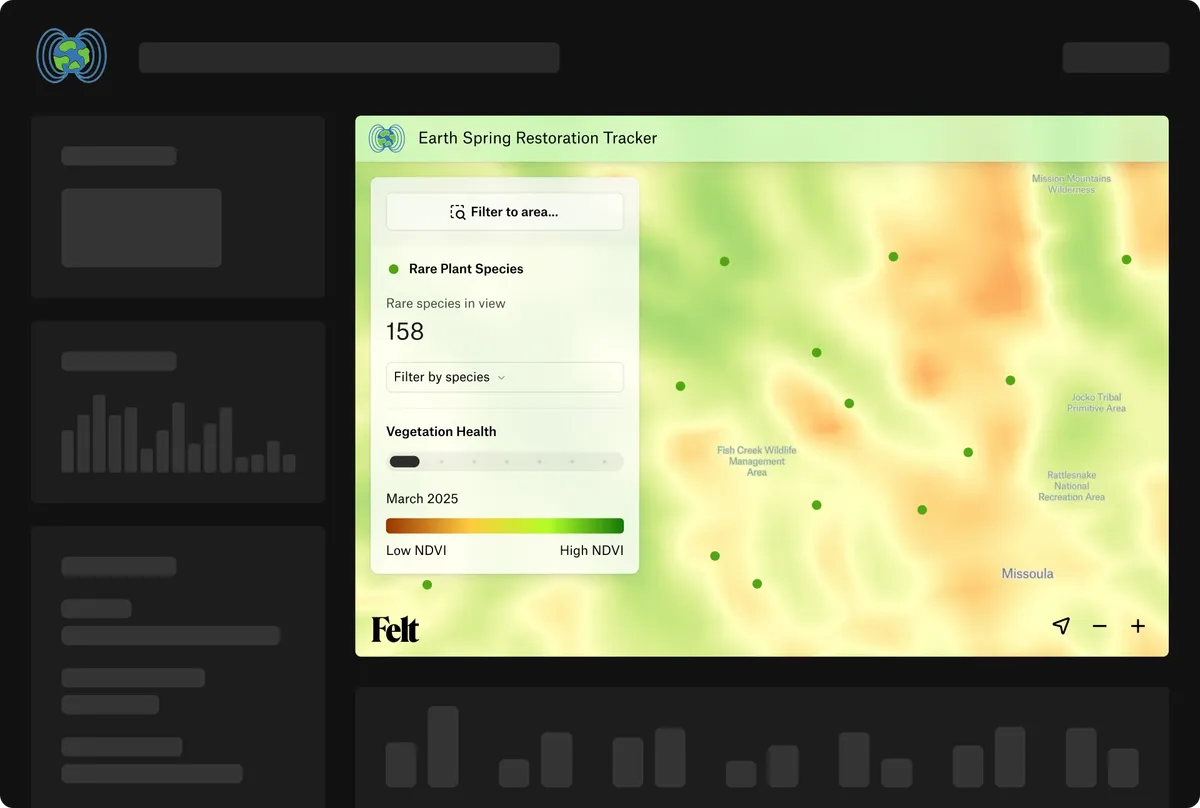
How Felt and Mapbox compare
| Felt | Mapbox | |
|---|---|---|
| What you get | A complete platform, from hosting and styling to analysis and dashboards, plus an SDK and REST API. | Building blocks: GL JS, the mobile SDKs, Studio and APIs. |
| Getting data on a map | Upload files up to 100 GB or connect a database. Felt tiles, hosts and refreshes it. | Studio uploads, or Mapbox Tiling Service, billed per megabyte and compute unit. |
| Who makes changes | Anyone with a seat, in the browser, with no deploy. | Developers in code, and Studio users in map styles. |
| Analysis and dashboards | Spatial operations, SQL and dashboard components, built in. | Built in your own code, with isochrone, matrix and optimization APIs. |
| Access control | Links, private maps, and authenticated embeds for viewers without Felt accounts. | Your application decides who sees what. |
| Navigation and search | Place search, and travel-time areas from Felt AI. | Turn-by-turn navigation, routing APIs and geocoding. |
| Mobile | Mobile browsers and embeds, plus the Felt Field App. | Native Maps SDKs for iOS and Android. |
What this page says about Mapbox was checked against Mapbox’s documentation on October 5, 2026: getting started, pricing.
Where each one fits
Felt speaks the formats you already use
Felt reads the formats Mapbox uses.
- Use a Mapbox Studio style as a Felt basemap.
- Add Mapbox vector tiles from a TileJSON URL.
- Felt draws maps with MapLibre and maintains Tippecanoe, the tiler first written at Mapbox.
- Export any layer as GeoJSON or GeoPackage.
Keep Mapbox for consumer apps and navigation
If the map is your product, with a custom design at consumer scale or directions at its core, Mapbox is built for it.
- Consumer apps with a fully custom map design.
- Turn-by-turn navigation, routing and route optimization.
- Native iOS and Android apps built on a maps SDK.
- Geocoding and place search inside your own product.
Why teams build on Felt instead
No tile pipeline to build
Felt processes, hosts and refreshes your data, so your engineers work on your product instead of map infrastructure.
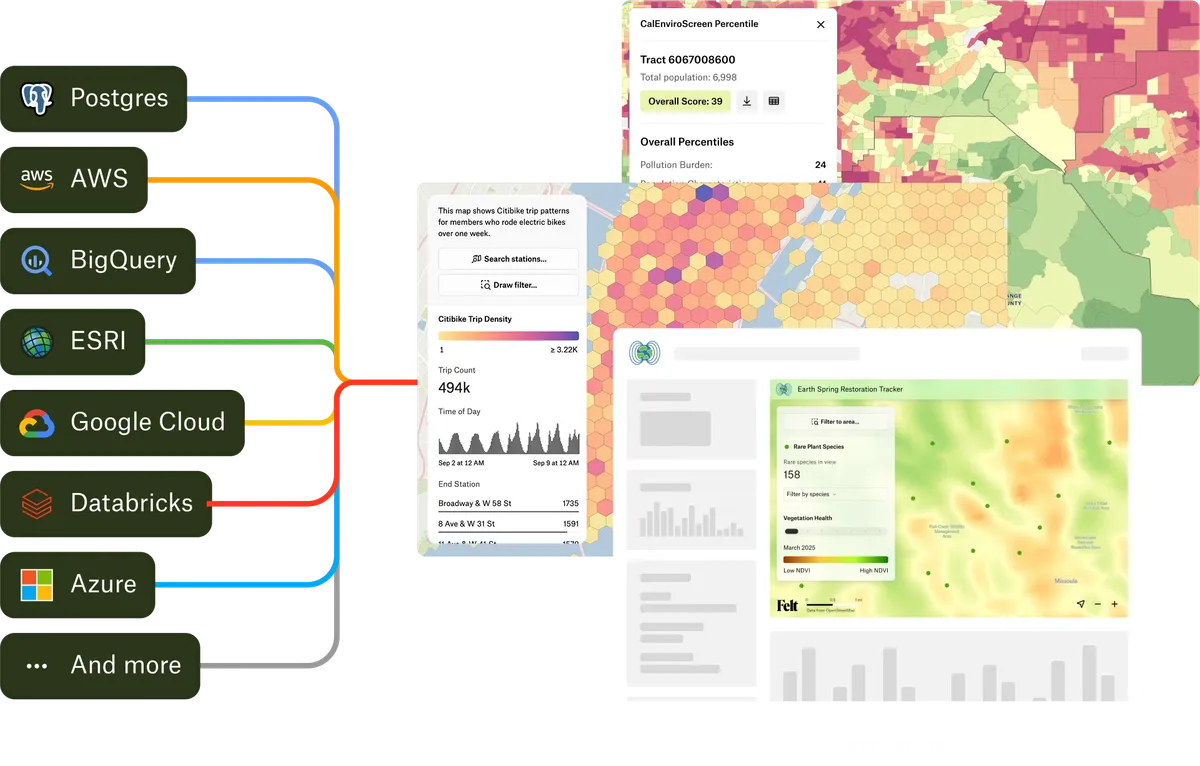
The people closest to the data make the changes
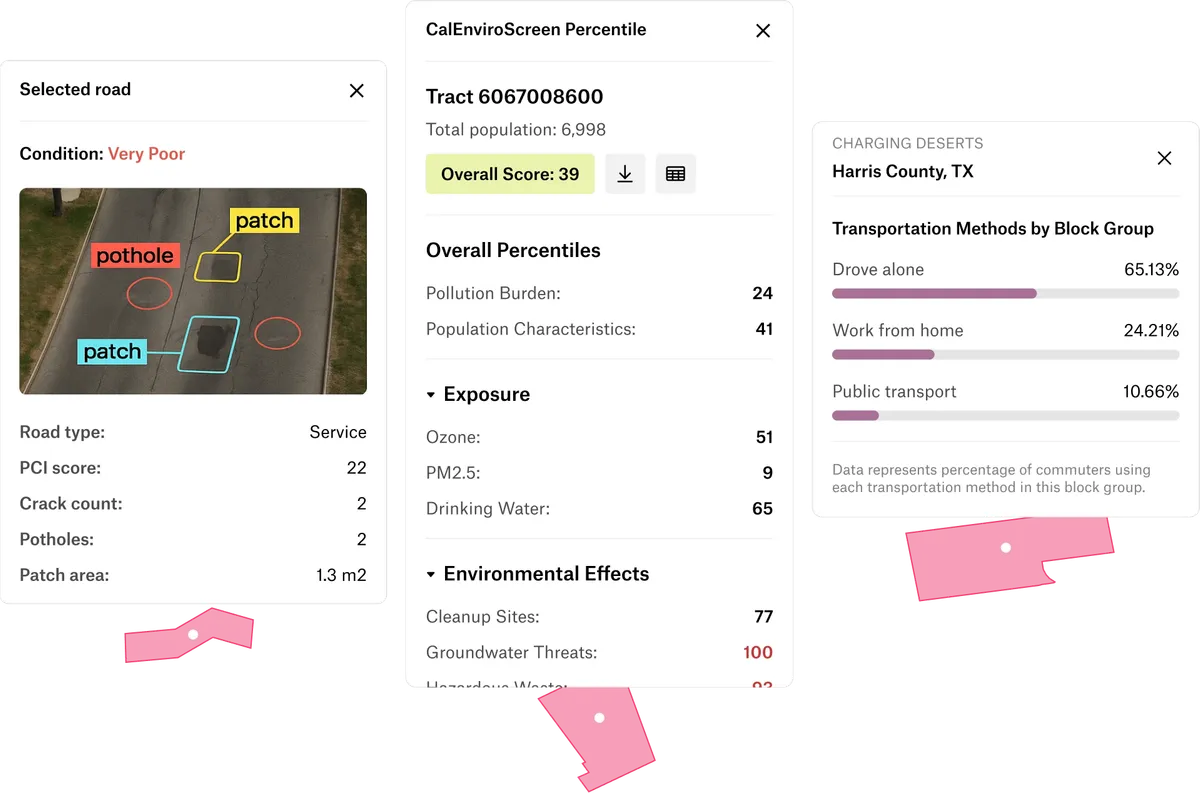
Analysts restyle layers, edit popups and update data in Felt, and the map in your product follows. No ticket, no deploy.
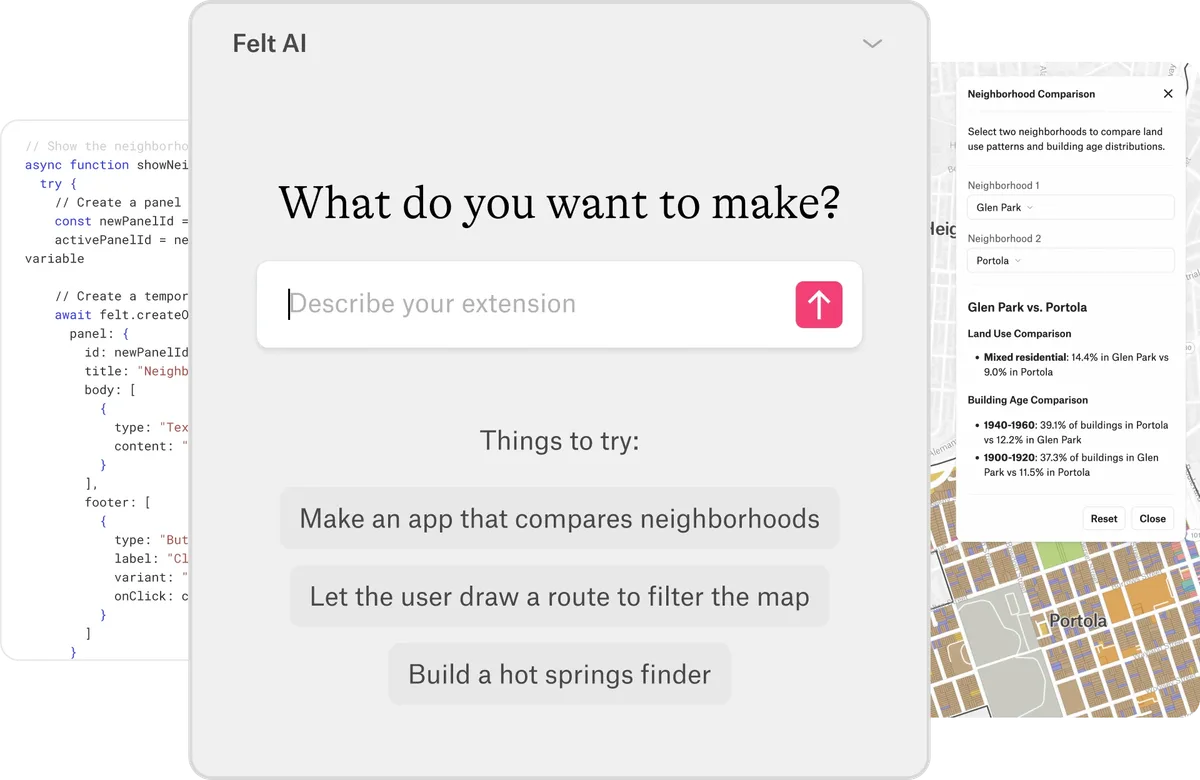
Custom tools without a sprint
Describe a tool and Felt AI writes it as an extension. The JavaScript SDK, REST API and Python library cover the rest.
From teams that chose Felt over building their own

The speedup from moving to Felt is very obvious.

We eliminated a year of custom development and maintenance work.

With Felt AI we can create full blown apps in minutes.
Common questions
- 01Is Felt a Mapbox alternative?
For maps inside your product, yes. Felt handles the data, hosting and editing tools, and your developers embed the result with the JavaScript SDK. For turn-by-turn navigation or a fully custom consumer map, Mapbox is the better fit.
- 02Can we embed Felt maps in our own product?
Yes. The JavaScript SDK controls the view, layers and clicks from your code, and authenticated embeds open private maps for customers without Felt accounts.
- 03Can developers automate Felt?
Yes. The REST API creates maps, uploads data and refreshes layers, webhooks report changes, and felt-python wraps the API for Python.
More comparisons
Ship the map, not the map stack
Connect a database or drop in a file and see your data live on a map in minutes.